


In the past, marketers were able to appeal to the masses and reach millions of people and effectively market to them with “broadcast media” – radio, TV, newspapers, magazines, billboards, the Yellow Pages, telemarketing and even cold calling.
Many of these “outbound marketing” techniques that worked so well in the 20th century are in danger of extinction today. Why? Because people spend their time differently today, have thousands of information sources to choose from, and now have ways to filter unwanted advertising out of their lives.
Increasingly, more of our time and attention has shifted away from traditional types of broadcast media to selected channels of online media instead. Turning up the volume louder only causes  people to tune out further and look for new ways to block and ignore you in the future.
Annoying radio ads cause us to change the channel. Annoying TV ads trigger a quick “mute” button response or channel change on our remotes. And half the time we have our PC in our lap, where our attention is actually focused now – online.
The point is, we have so many “channels” of interesting content available to us, we no longer have to put up with advertisers interrupting and annoying us constantly.
The lonely broadcast marketer with his little megaphone no longer controls us. We have taken charge of how information flows into our lives and we have no intentions of giving up that control.
Buyers now have advertisement filters such as caller ID, Tivo and other DVR’s, email spam filters and other filters that minimize unwanted interruptions by advertisements and unsolicited sales calls. But this is only the first level of defense.
The next level involves our mental attention filters. Yes, the human brain is quite capable of filtering out unwanted noise or other sounds that annoy or disinterest it. Ever wonder why wives become so annoyed with their husbands “not hearing” them? Hey – it happens all the time, especially when we are engrossed in something else and an “interruption” comes at an inopportune time.
And how many banner ads have you actually read and clicked on lately? How many have you even seen while visiting websites? Believe me, they are still there. But our minds have become so adept at ignoring them over the years that we barely even know they exist.
But our subconscious minds do see and process most everything our sensory systems are exposed to – even those pesky banner ads. It is our conscious mental processing facilities that are being shielded and protected from these unwanted interruptions.
Another part of this phenomenon has to do with the number of choices we have today to satisfy our information needs and interests. In the past, we had a half dozen TV channels to choose from. Now there are hundreds – and yet often times there’s “nothing on” that we want to watch…
We listen to satellite radio in our cars now. Why? Because of the variety of programming – and to avoid the annoying ads that pester us on broadcast radio.
So what does get our attention? Increasingly, only those things which interest us and satisfy some selfish needs or desires, including:
- Socializing with our friends on Facebook
- Reading the latest news at our favorite online news sites
- Reading our favorite blogs – and writing our own blog
- Reading even more targeted “news” being reported by everyone we follow on Twitter
- Reading the latest discussions groups on forums, LinkedIn and many other sites
- Listening to our music collection on iTunes, the iPod, or iPhone
- Listening to music and watching videos on YouTube
- Listening to a podcast or recorded video webinar
- Playing online and offline games on our PCs, TV’s and handheld devices
- Any number of dozens of “personal channels” of information we have chosen for ourselves.
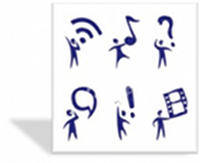
Today, people control the information that flows into their lives. And unless you can find a way to flow naturally into your target audience’s lives within the confines of the “personal channels” people now use, increasingly, you simply won’t be heard and will fade away into the background.
Not only that, information now flows both ways. We are all now “information publishers” via Facebook, Twitter and our blogs. So we are not only consuming information in various non-traditional places, we are also there producing information for our own audiences.
Today, we pay attention to whatever we choose – and certainly not anything that advertisers try to force upon us. If you’re advertising and shouting, we’re not listening – we’re ignoring you. And unless you appeal to us in the right ways, in the right places and at the right times, we’ll just continue ignoring you and you will eventually go away – because you will no longer be able to make a profit pestering us.
Advertisers are no longer in charge – buyers are in charge. You can’t just buy our time and command us to pay attention – at least not online (and the offline methods aren’t working so well now, either). And this phenomenon is just as prevalent in B2B as it is with consumers.
And just because you’re selling to business people, don’t kid yourself – we’re people, too.
People are consumers first and foremost – and business people second. Our consumer behaviors determine how we prefer to look for and find what we want – and how we make most of our decisions.
Instead of bucking these inescapable trends, smart marketers have learned to update their canvassing and branding strategies.
Instead of interrupting people and either shouting louder or jolting people to gain their attention, these marketers figured out if you:
1) Find where your buyers are now listening,
2) Provide valuable, interesting content, and
3) Talk about what prospects are actually interested in.
Then they’ll gladly pay attention.
What a concept!
And it works. The key to gaining people’s attention is giving them great content that’s interesting, engaging and useful. People love good content and they will actually go out of their way to actually find it!
That’s right. Instead of broadcasting and interrupting everyone to find those chosen few who actually have an interest in what you have to say, you instead attract qualified prospects to find you.
Bloggers know that content is king and the only reason their audience shows up is because the content is worthy of the reader’s time and interest. And Twitter provides yet another direct way to find relevant content, as well as poke your head into someone’s social network tent from time to time and see what’s happening.
Blogging platforms like WordPress have made it so quick and easy to become an information publisher than anyone can do it. In fact, WordPress is so robust and flexible now that it’s often the best way to build a new website, very inexpensively and quickly.
Millions of people are now information publishers. People are now so busy socializing, publishing and consuming interesting content and taking care of business online, they no longer have the time to deal with interruptions – and when they do get interrupted, instead of paying attention, they get angry and look for ways to block future interruptions (by hitting the SPAM button in email, blocking the user and making a mental note to avoid this time-waster from now on).
Welcome to the age of “inbound marketing”. Your mission, should you choose to accept it is to join the conversations taking place in your marketplace and add some actual value of interest to your audience, so you’ll be noticed and buyers who are looking for you and your products can actually find you.
Now, having made the case for inbound marketing, there is certainly still a place for outbound marketing. It’s not actually dead, just diluted and diminished in its effectiveness – unless you provide interesting content! That’s why the latest Super Bowl ads try so hard to entertain us. It’s the only way to get our attention – but one must wonder whether anyone is getting real ROI from such ads.
Marketers need to choose the right balance in today’s marketing mix to ensure both routes to reaching customers are used properly. And be careful not to “cross the streams” – don’t use traditional outbound techniques with social networking, for example.
Social networking is about having real conversations with people, learning and publishing useful interesting content – not advertising or direct-response marketing. Instead of “driving” people to take action (the old marketing vernacular), we now “invite” people and “attract” them to join us because we provide them with something of interest and value – worthy of their increasingly limited attention span.
Today’s savvy marketer is “tuning in” to the personal channels where the audience now spends their time and instead of finding new ways to interrupt prospects, creating useful, interesting and differentiated content that naturally appeals to the audience.
This is not just about the “media” used to deliver content. Broadcast media (TV, radio, etc.) aren’t going away. What’s changed is that we must identify the “personal channels” people are tuned into and deliver interesting, useful content on their preferred channels of attention.
Broadcasting marketing is out. Personal channel marketing is in.
– Rick
| About Rick Braddy Related Resources More Posts by Rick Braddy To discover the easy and inexpensive ways anyone can attract more clients and maximize their profits, sign up for your FREE Profit Now Report. |

